
Shorthand Case Study

How The FA turned an unknown strategy doc into a high-traffic brand asset

Using Shorthand, The FA transformed its four-year strategy aimed at industry insiders into a public-facing, high-traffic hero piece with more than 30,000 page views.

Sample footballer imagery from The FA's digital reports and feature stories.

Goal

Publish more engaging and accessible reports and team stories.

205,000 (and counting) views on FA Cup Finals winners' list
1x industry award

Problem

Strategy documents were uninspiring PDFs.

Images in CMS stories and PDFs were small and unable to do justice to The FA's professional photography.

Solution

Adopted Shorthand for digital publishing:
Engaging, accessible strategy reports
Striking, visually-led feature stories

Goal

Publish more engaging and accessible reports and team stories.

Problem

Strategy documents were uninspiring PDFs.

Images in CMS stories and PDFs were small and unable to do justice to The FA's professional photography.

Solution

Adopted Shorthand for digital publishing:

Engaging, accessible strategy reports
Striking, visually-led feature stories

205,000 (and counting) views on FA Cup Finals winners' list
1x industry award

The FA, England football’s governing body, is one of the most talked-about organisations in the country. From managing grassroots facilities to supporting national teams and promoting equality across the sport, its scope is vast. Its long-term strategies affect thousands of clubs and millions of players and fans.

Nicholas Veevers is the Content Manager for The FA’s owned channels, which include TheFA.com and EnglandFootball.com. He spoke to us about why The FA chooses Shorthand for high-impact digital publishing — and about the award-winning content his team has created with the platform.

The four year plan that became a hit

One particular project — publishing a more engaging version of The FA’s four-year strategy outlook — turned a text-heavy, industry-facing document into an engaging, community-pleasing roadmap created with Shorthand.
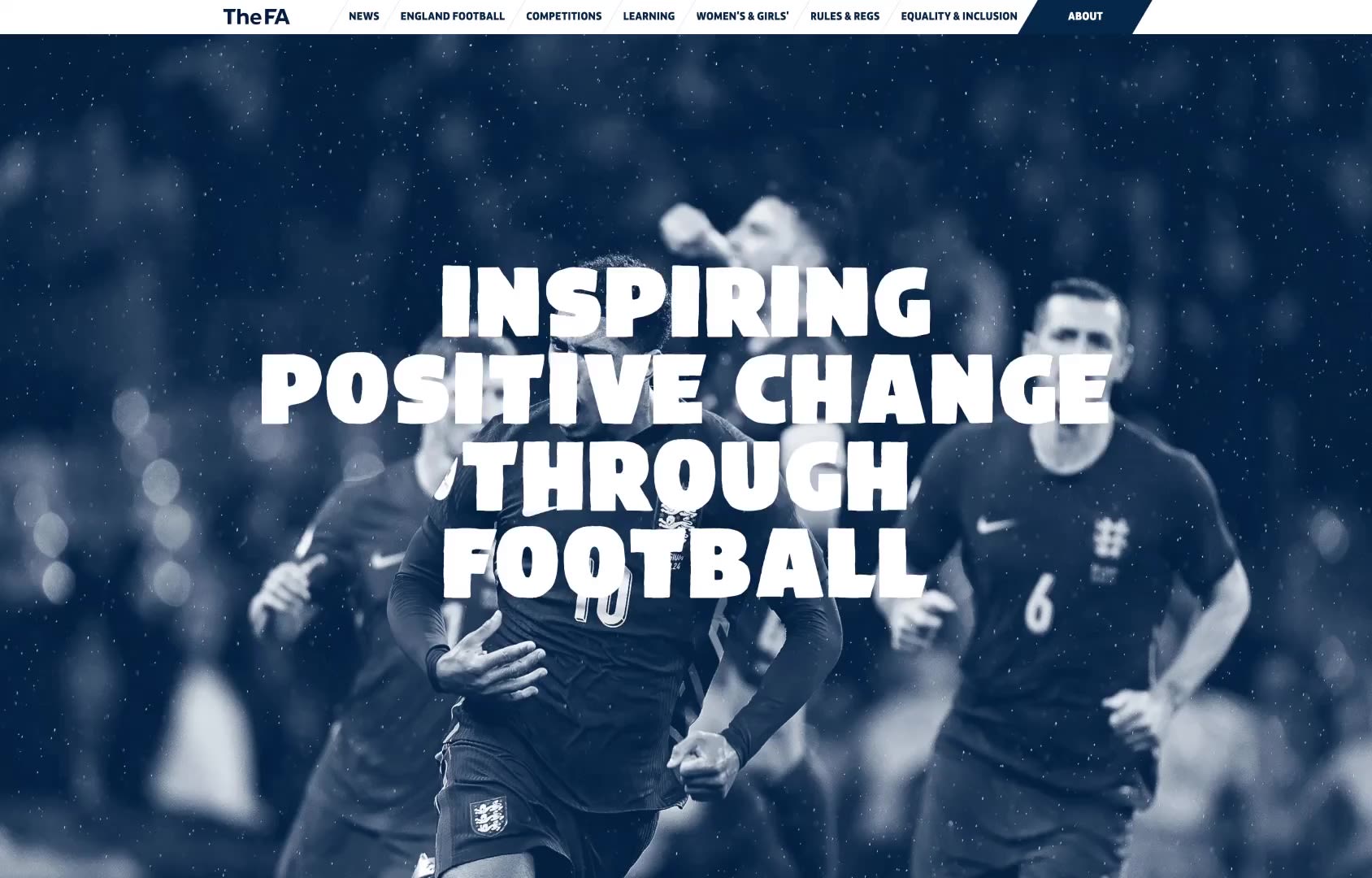
'Inspiring Positive Change Through Football', The FA’s 2024–2028 strategy.

'Inspiring Positive Change Through Football', The FA’s 2024–2028 strategy.

Veevers recalls previous iterations, which were wordy PDF reports, only available for download.

The numbers of people looking at it far exceeded anything we would have done with a news article or a website page with a ‘click here’ opening to a PDF.

“Traditionally, it’s the sort of thing that a select few journalists might look at, or industry insiders. But your general person on the street wouldn’t have much interest in what the FA’s strategy is for the next four years.”

Since switching to publishing the strategy with Shorthand, the difference has been night and day. In the year since its publication, The FA’s 20242028 strategy has surpassed 30,000 page views. 

“The numbers of people looking at it far exceeded anything we would have done with a news article or a website page with a ‘click here’ opening to a PDF,” Veevers says. “The main aim was to make it more consumable.”

“That was a big success for us.”

The FA, Shorthand, and Harpoon teams collect the Gold trophy at the awards night.

The strategy report won a gold award at Communicate magazine's 2025 Corporate & Financial Awards. Image courtesy of Communicate.

The strategy report won a gold award at Communicate magazine's 2025 Corporate & Financial Awards. Image courtesy of Communicate.

The success earned recognition when the strategy received a gold award in the Best Online Report category at Communicate magazine’s 2025 Corporate & Financial Awards.

“Quite a few sporting bodies have seen it and it’s become a widely shared example of best practice,” he says.

The success of the 20242028 strategy has led to what Veevers calls a “cascade effect.” Other sub-departments “all liked the strategy and said ‘We’d like to do that’.” 

Striking team stories

At The FA, Shorthand isn’t just used for high-profile hero pieces. Veevers and his colleague Holly Hunt use the platform day to day. “The strategy is what obviously got the headlines, people are picking it out as a good example, but we do use Shorthand more and more for editorial purposes.”

“We’re not graphic designers. We’re more like writers and journalists by background,” he says. Yet they have been able to prepare a number of striking, high-performing stories themselves.

Their ongoing history of all FA Cup finals from 1872 to today has attracted more than 205,000 views. “If we had just put that in an article, it wouldn’t be anywhere near that number.”

Shorthand gives us an opportunity to really showcase photography.

Similarly, galleries from England team training camps — previously published as standard web articles — would “maybe get sometimes a couple of hundred page views.”

“Whereas the ones we’ll do in Shorthand will get two to three thousand. There’s a definite difference.”

Veevers appreciates the way Shorthand enables the organisation to make the most of the photography it has at its disposal. “When you’re putting images into the CMS, they’re small. They’ve got to fit but they’re not the highest resolution.”

“[Shorthand] gives us an opportunity to really showcase photography.”

Title image from 'The dogs of St Georges Park' digital story.

'The dogs of St. Georges Park' follows Lioness team members who brought their pet dogs to an April training camp.

'The dogs of St. Georges Park' follows Lioness team members who brought their pet dogs to an April training camp.

With a dedicated photographer assigned to the men’s and women’s national teams, an early pain point was not really having “a decent platform to showcase it.” 

Today he loves “the ability to make imagery a bigger part of our content.”

“You can experiment, and you can work with the different tools, and you can really amplify what you’re wanting to present, and it’s not a difficult thing to do.”

Read more success stories