How RELX increased internal comms reads more than tenfold with Shorthand
RELX engaged 33,000 employees with visual stories, growing views from around 800 to more than 10,000 and lifting employee Net Promoter Scores by 20 points.
How RELX increased internal comms reads more than tenfold with Shorthand
RELX engaged 33,000 employees with visual stories, growing views from around 800 to more than 10,000 and lifting employee Net Promoter Scores by 20 points.
Engage 33,000 employees in over 40 countries, and tell RELX's story directly to investors, policymakers, and customers.
Problem
Website stories were flat and image-light, averaging around 800 views each, and earned media rarely ran longform features about the business.
Solution
Adopted Shorthand for internal and owned media:
✓ Weekly human-interest stories ✓ Lead stories for all-staff emails ✓ Social campaigns with 10k+ story views
Goal
Engage 33,000 employees in over 40 countries, and tell RELX's story directly to investors, policymakers, and customers.
Problem
Website stories were flat and image-light, averaging around 800 views each, and earned media rarely ran longform features about the business.
Solution
Adopted Shorthand for internal and owned media:
✓ Human-interest stories ✓ Weekly staff features ✓ Investor storytelling
Here’s an internal communications challenge: How do you engage 33,000 diverse employees, working across four different verticals in over 40 countries around the world?
Across the businesses, we've had a 20 point increase in people saying they would recommend RELX as a place to work.
This was the challenge faced by Paul Abrahams, Chief Communications Officer at RELX, when he came across a Shorthand story published by the BBC. “After finding the Shorthand website, I found some other stories and was blown away.”
Paul and his team began to publish with Shorthand soon after, and saw results straight away.
“The first story we did was on The Lancet, which is one of our publications. After posting that story, we immediately saw a threefold increase in the number of reads and a 50% increase in dwell time.”
Here’s an internal communications challenge: How do you engage 33,000 diverse employees, working across four different verticals in over 40 countries around the world?
This was the challenge faced by Paul Abrahams, Chief Communications Officer at RELX, when he came across a Shorthand story published by the BBC. “After finding the Shorthand website, I found some other stories and was blown away.”
Paul and his team began to publish with Shorthand soon after, and saw results straight away.
The first story we did was on The Lancet, which is one of our publications. After posting that story, we immediately saw a threefold increase in the number of reads and a 50% increase in dwell time.
“Whoa, that's amazing”
While RELX’s initial stories were aimed at the wider public, the team soon began to publish stories for the group’s more than 33,000 staff around the world.
We saw a more than tenfold increase in the number of reads, as compared with previous internal comms stories.
As Paul explains, the initial results were astonishing.
“To help drive employee advocacy across RELX, we decided to deploy Shorthand to tell human-interest stories across our business. The first story we published was on flexible working at RELX. We saw a more than tenfold increase in the number of reads, as compared with previous internal comms stories. Our reaction was, ‘Whoa, that's amazing. How do we do that again?’ That was when we knew we had to double down and actually put together a systematic campaign.”
Since then, the RELX team has ramped up the number of stories they publish with Shorthand. “We’re now publishing one per week. We’ve got plenty of great stories coming through. The internal stories — which we run so people can read them externally — have proven very successful.”
The success of their Shorthand stories has inspired the team to produce more and more great content. “Previously on the website, it had been a bit of a chore. But now, everyone is coming up with great ideas and wanting to publish. The team gets really excited when the stories come out. It's become much, much easier to extract stories from the business than in the past.”
“Whoa, that's amazing”
While RELX’s initial stories were aimed at the wider public, the team soon began to publish stories for the group’s more than 33,000 staff around the world.
As Paul explains, the initial results were astonishing.
To help drive employee advocacy across RELX, we decided to deploy Shorthand to tell human-interest stories. The first story was on flexible working at RELX. We saw a more than tenfold increase in the number of reads. Our reaction was, ‘Whoa, that's amazing. How do we do that again?’
Since then, the RELX team has ramped up the number of stories they publish with Shorthand. “We’re now publishing one per week. We’ve got plenty of great stories coming through. The internal stories — which we run so people can read them externally — have proven very successful.”
The success of their Shorthand stories has inspired the team to produce more and more great content. “Previously on the website, it had been a bit of a chore. But now, everyone is coming up with great ideas and wanting to publish. The team gets really excited when the stories come out. It's become much, much easier to extract stories from the business than in the past.”
Seeing this early success, the team began to use social media campaigns to promote the stories more widely.
“Prior to Shorthand, we were getting around 800 views per story,” Paul explains. “But using Shorthand and social media campaigns, we began to consistently get over 10,000 views per story.”
Laure Lagrange, RELX’s Media Relations Manager, produced many of the team’s Shorthand stories. “I’m on Shorthand daily. I find it inspiring to use — it just works for all sorts of different stories.”
When the team tried a listicle format, it became the most successful story they had published.
“I get really inspired by the possibilities and I think it's so scalable,” Laure says. “Shorthand is at the heart of our owned media strategy.”
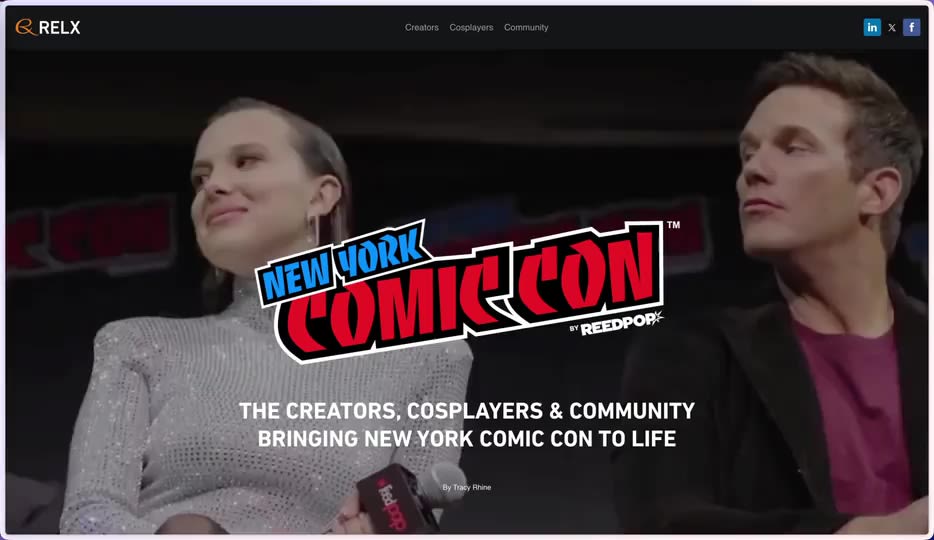
"New York Comic Con by ReedPop" by RELX.
"New York Comic Con by ReedPop" by RELX.
Measuring success
To measure return on investment, the team used a simple metric: cost per read.
We are now comfortably on target to reach 200,000 reads for the year.
“Cost per read is a great way for us to compare ROI across platforms,” Paul says. “So, for Shorthand, the cost per read might be slightly under a penny. Whereas for our video platform, it’s closer to a pound.”
Using Shorthand, the team has easily exceeded their annual KPIs. “The target we had for this year was to go from 30,000 to 60,000 reads. We hit that in late April. And we are now comfortably on target to reach 200,000 reads for the year.
“With Laure’s latest story, we hit 15,000 reads in about four days.”
Measuring success
To measure return on investment, the team used a simple metric: cost per read.
Cost per read is a great way for us to compare ROI across platforms. For Shorthand, the cost per read might be slightly under a penny. Whereas for our video platform, it’s closer to a pound.
Using Shorthand, the team has easily exceeded their annual KPIs. “The target we had for this year was to go from 30,000 to 60,000 reads. We hit that in late April. And we are now comfortably on target to reach 200,000 reads for the year.
“With Laure’s latest story, we hit 15,000 reads in about four days.”
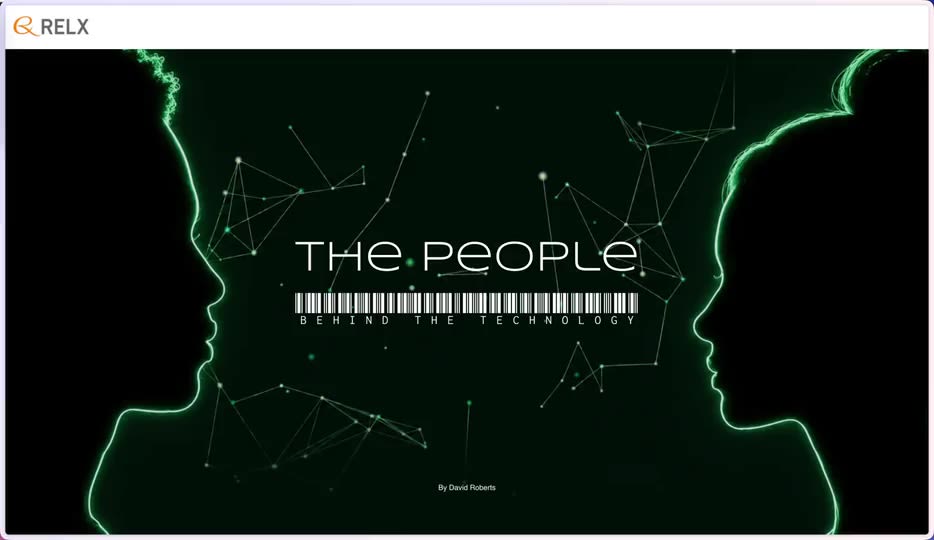
"The people behind the technology" by RELX.
"The people behind the technology" by RELX.
“Those are record levels”
Employee Net Promoter Scores within RELX have soared.
Every week, the RELX team sends an email to all 33,000 staff — ‘the Friday update.’
“The lead story most weeks is a Shorthand story,” Paul says. “And the response has been really, really good. We’re getting people from around the company contacting us and responding to stories. The content published with Shorthand gives people more of a feeling of working for RELX itself, and not just one of our verticals.”
Employee sentiment followed. “Net Promoter Scores within RELX have soared. Across the businesses, we've had a 20 point increase in people saying they would recommend RELX as a place to work. Those are record levels.”
“Those are record levels”
Every week, the RELX team sends an email to all 33,000 staff — ‘the Friday update.’
“The lead story most weeks is a Shorthand story,” Paul says. “And the response has been really, really good. We’re getting people from around the company contacting us and responding to stories. The content published with Shorthand gives people more of a feeling of working for RELX itself, and not just one of our verticals.”
Employee sentiment followed.
Net Promoter Scores within RELX have soared. Across the businesses, we've had a 20 point increase in people saying they would recommend RELX as a place to work. Those are record levels.
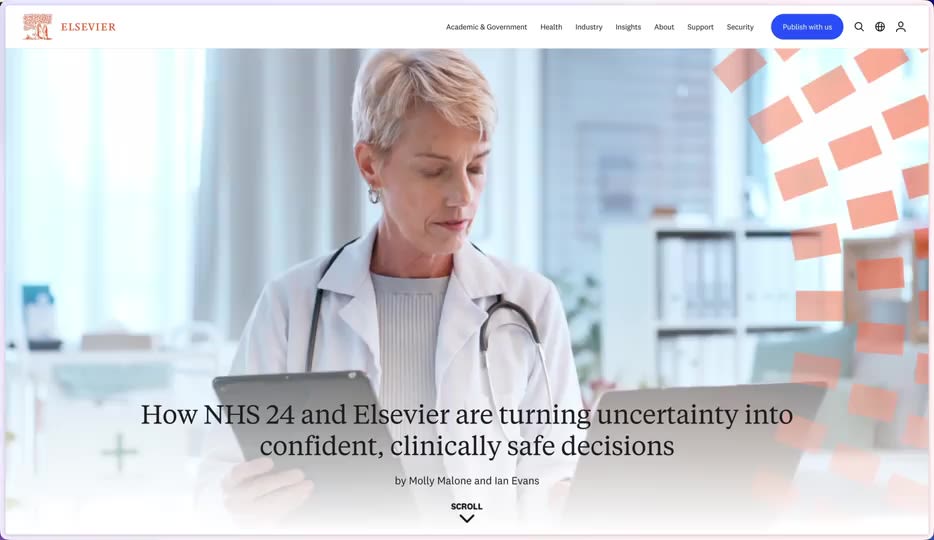
"How NHS 24 and Elsevier are turning uncertainty into confident, clinically safe decisions" by RELX.
"How NHS 24 and Elsevier are turning uncertainty into confident, clinically safe decisions" by RELX.
“Shorthand has been transformational”
Shorthand helped RELX bridge the gap between earned media and owned media.
Two decades ago, successful companies like RELX would have no problem placing stories at major publications. But, as Paul explains, these days, “it’s very difficult for publications to do longform journalism, especially about businesses.”
The stories we’re publishing now look simply beautiful. And now we're getting as many as 15 times the number of reads that we used to get.
The solution for Paul was to find a way to tell those stories for themselves. “Shorthand provided that platform for us. We’re now telling the sort of stories that journalists would have written 20 years ago, but they don't anymore.
“These stories are of huge interest to the various audiences that we're trying to reach — investors, politicians and policy makers, customers, employees, and potential employees. Shorthand allows us to do that in a way that we just couldn't before.”
As Paul explains, “The content on our old website was interesting, but it wasn’t inspiring. The stories were flat and didn’t have much imagery. It just wasn’t fit for purpose for our organisation. And it didn’t express the talent we had in our team.
“Compare that with what we can do now with Shorthand. The stories we’re publishing now look simply beautiful. And now we're getting as many as 15 times the number of reads that we used to get.
“There's a general genuine buzz in the team about what we’re publishing. There’s no way that was happening two and a half years ago on the old website. Shorthand has been transformational.”
Shorthand helped RELX bridge the gap between earned media and owned media.
Two decades ago, successful companies like RELX would have no problem placing stories at major publications. But, as Paul explains, these days, “it’s very difficult for publications to do longform journalism, especially about businesses.”
The solution for Paul was to find a way to tell those stories for themselves. “Shorthand provided that platform for us. We’re now telling the sort of stories that journalists would have written 20 years ago, but they don't anymore.
“These stories are of huge interest to the various audiences that we're trying to reach — investors, politicians and policy makers, customers, employees, and potential employees. Shorthand allows us to do that in a way that we just couldn't before.”
The content on our old website was interesting, but it wasn’t inspiring. The stories were flat and didn’t have much imagery. It just wasn’t fit for purpose for our organisation. And it didn’t express the talent we had in our team.
“Compare that with what we can do now with Shorthand. The stories we’re publishing now look simply beautiful. And now we're getting as many as 15 times the number of reads that we used to get.
“There's a general genuine buzz in the team about what we’re publishing. There’s no way that was happening two and a half years ago on the old website. Shorthand has been transformational.”

 Built with Shorthand