Behind the scenes of club management and matchday performance at Brentford FC are human stories: players moving across the world, families adjusting to new lives, staff taking on new roles, and supporters looking for a deeper connection with the people they watch every week.
Fans want to feel connected to the players that they watch on a Saturday. And telling those stories helps to create that bond.
Longform storytelling plays an important role in bringing these stories to life in the club’s owned media strategy.
“There’s a big emphasis within the industry on shorter form content,” says Sam Marshall, Brentford’s Head of Editorial. “But we still put a lot of time and resources into our longer form storytelling.”
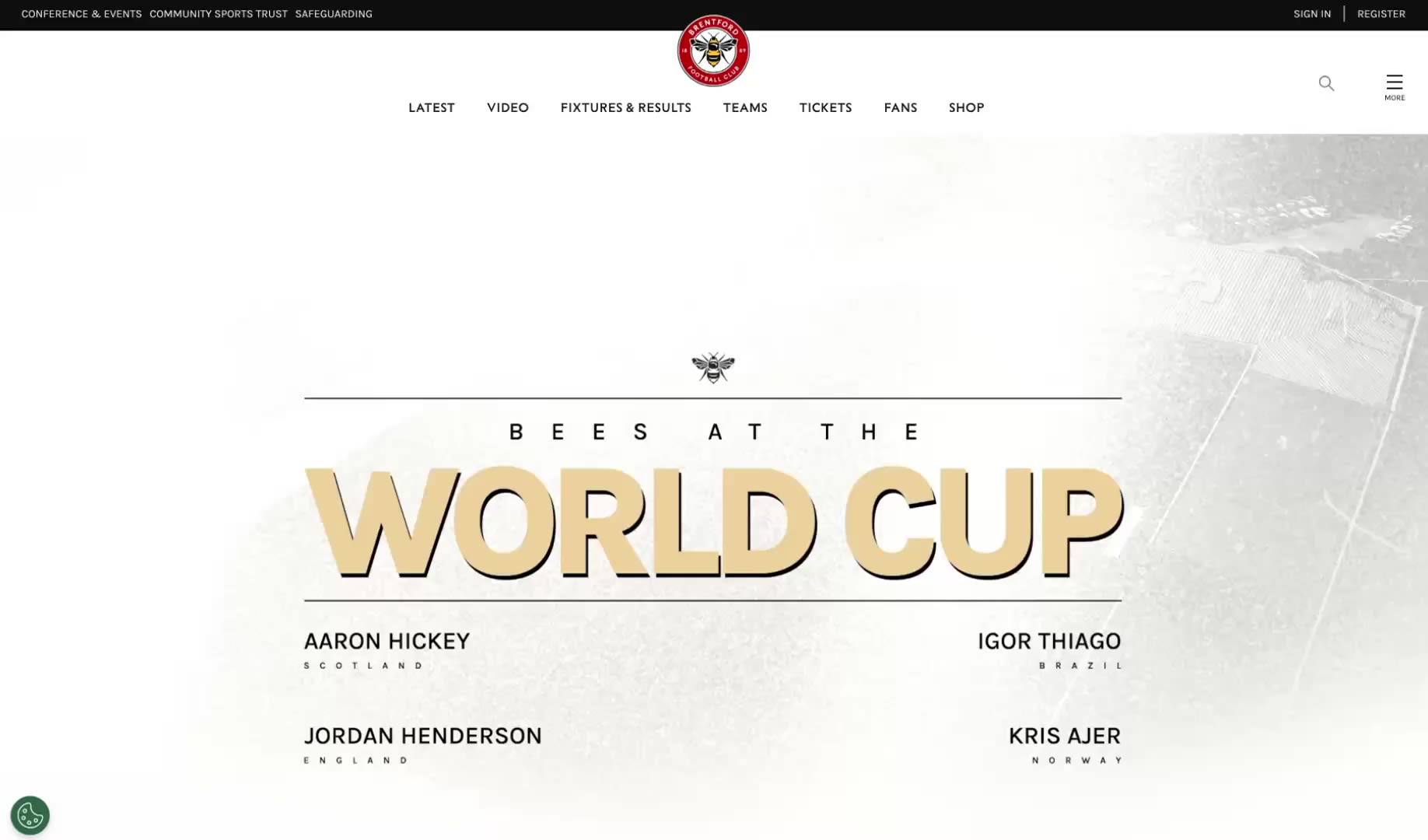
Brentford uses Shorthand to create stories that feel distinct from everyday match reports, highlights, and social posts. These stories combine editorial depth, striking media, and considered design.
Behind the scenes of club management and matchday performance at Brentford FC are human stories: players moving across the world, families adjusting to new lives, staff taking on new roles, and supporters looking for a deeper connection with the people they watch every week.
Longform storytelling plays an important role in bringing these stories to life in the club’s owned media strategy.
“There’s a big emphasis within the industry on shorter form content,” says Sam Marshall, Brentford’s Head of Editorial.
But we still put a lot of time and resources into our longer form storytelling.
Brentford uses Shorthand to create stories that feel distinct from everyday match reports, highlights, and social posts. These stories combine editorial depth, striking media, and considered design.
Football clubs have access that external broadcasters and publishers rarely get. Brentford’s editorial team uses that access to tell stories that foster connections with fans.
“We have players and staff from all over the world. Each of them has a unique story and path to Brentford. And we as club media are in a unique position to be able to uncover and then tell those stories.”
That content matters because, as Sam explains, “Fans want to feel connected to the players that they watch on a Saturday. And telling those stories helps to create that bond.”
The results of these stronger connections are reflected in Brentford’s content performance.
Results: more time, more scroll, more storytelling ambition
Brentford is still early in its Shorthand journey, but the club is already seeing the value of using a more immersive format for its most considered editorial work.
Sam says the impact is particularly visible when comparing Shorthand stories with articles published through the club’s standard website.
“[We are] able to elevate what we were doing already and see the impact of that on scroll percentage and time on page — two metrics that we've seen a huge increase in compared to just publishing within our own website.”
The numbers back this up — Brentford's stories built with Shorthand average more than three minutes’ time on page.
“It's just really pleasing for us and exciting to be able to evolve that further as we go.”
Building connection beyond matchday
Football clubs have access that external broadcasters and publishers rarely get. Brentford’s editorial team uses that access to tell stories that foster connections with fans.
“We have players and staff from all over the world. Each of them has a unique story and path to Brentford. And we as club media are in a unique position to be able to uncover and then tell those stories.”
That content matters because, as Sam explains, “Fans want to feel connected to the players that they watch on a Saturday. And telling those stories helps to create that bond.”
The results of these stronger connections are reflected in Brentford’s content performance.
Results: more time, more scroll, more storytelling ambition
Brentford is still early in its Shorthand journey, but the club is already seeing the value of using a more immersive format for its most considered editorial work.
Sam says the impact is particularly visible when comparing Shorthand stories with articles published through the club’s standard website.
We are able to elevate what we were doing already and see the impact of that on scroll percentage and time on page — two metrics that we've seen a huge increase in compared to just publishing within our own website.
The numbers back this up — Brentford's stories built with Shorthand average more than three minutes’ time on page.
“It's just really pleasing for us and exciting to be able to evolve that further as we go.”
Like many elite sports organisations, Brentford has access to a strong bank of photography: training images, matchday shots, portraits, behind-the-scenes captures, and campaign assets.
Shorthand gives the club a way to make that imagery central to the storytelling experience.
Matt Parsons, Brentford’s Senior Designer, says Brentford often plans imagery around the tone of a feature, rather than defaulting to standard in-game photography.
“That's another consideration for us: ensuring that the imagery fits the tone of the piece. It's definitely something that we start to look at to give context: imagery that works alongside the tone and mood.”
‘Five years on’, an immersive long read celebrating Brentford's promotion to the Premier League.
‘Five years on’, an immersive long read celebrating Brentford's promotion to the Premier League.
‘Five years on’, an immersive long read celebrating Brentford's promotion to the Premier League.
‘Five years on’, an immersive long read celebrating Brentford's promotion to the Premier League.
From long reads to social campaigns
Brentford's Shorthand stories are designed to work as part of a broader owned media ecosystem, where social creative drives audiences into the longform experience.
Matt describes the club’s approach as an evolution of what Brentford had already been doing on social media. Story posts on social combine pull-out imagery and quotes in carousels that encourage people to click through to the articles.
Cross-platform consistency is key. A supporter might first encounter a quote card on Instagram, tap through on mobile, and then experience the full story in Shorthand. The visual language remains connected throughout.
“It transfers both across web and mobile. The consistency from that, alongside the consistency of the social media output, just makes it a lot more flush across the board.”
The future of football storytelling
As owned media continues to evolve, Sam believes football clubs have an important role to play: telling stories that only they can tell.
“I think for in-house media teams, it's all about using the access and the relationships there to provide a level of insight and perhaps honesty the external broadcasters aren't always able to get from players and staff.”
It's all about using the access and the relationships there to provide a level of insight and perhaps honesty the external broadcasters aren't always able to get.
That access cannot be automated. While Brentford is experimenting with AI to support consistency and efficiency, the club sees human relationships as essential to its storytelling.
Matt sees a similar balance on the design side. AI can help with production tasks, but it cannot replace creative judgement.
“I don't think it can replace the creative thought process behind it. And it should be used as an addition, not as a complete replacement of the human side.”
For Brentford, the future of digital storytelling is about using the right tools with taste, timing, and editorial intent, not using every tool available.
Shorthand gives the club a platform to do exactly that: create stories that feel considered, visual, and human — and that help supporters see the people behind the performances.
From long reads to social campaigns
Brentford's Shorthand stories are designed to work as part of a broader owned media ecosystem, where social creative drives audiences into the longform experience.
Matt describes the club’s approach as an evolution of what Brentford had already been doing on social media. Story posts on social combine pull-out imagery and quotes in carousels that encourage people to click through to the articles.
Cross-platform consistency is key. A supporter might first encounter a quote card on Instagram, tap through on mobile, and then experience the full story in Shorthand. The visual language remains connected throughout.
“It transfers both across web and mobile. The consistency from that, alongside the consistency of the social media output, just makes it a lot more flush across the board.”
The future of football storytelling
As owned media continues to evolve, Sam believes football clubs have an important role to play: telling stories that only they can tell.
It's all about using the access and the relationships there to provide a level of insight and perhaps honesty the external broadcasters aren't always able to get.
That access cannot be automated. While Brentford is experimenting with AI to support consistency and efficiency, the club sees human relationships as essential to its storytelling.
Matt sees a similar balance on the design side. AI can help with production tasks, but it cannot replace creative judgement.
“I don't think it can replace the creative thought process behind it. And it should be used as an addition, not as a complete replacement of the human side.”
For Brentford, the future of digital storytelling is about using the right tools with taste, timing, and editorial intent, not using every tool available.
Shorthand gives the club a platform to do exactly that: create stories that feel considered, visual, and human — and that help supporters see the people behind the performances.
See your team's content in Shorthand
Share your content and we'll rebuild it in Shorthand — free, no strings attached.
Read more success stories
Start creating for free
Try Shorthand free for as long as you like. No commitment, no credit card needed until you’re ready to publish.

 Built with Shorthand